Silicon-attested identity
for the
programmable economy.
Lindblad extends Arbitrum into the physical world. Physical hardware nodes with silicon-based identity that tokenize real-world assets, secure cross-chain bridges, and certify autonomous agents. Contracts live on Arbitrum, evolving into Arbitrum Orbit L3.
From silicon
to settlement.
Lindblad unifies three primitives that until now lived in separate systems: physical attestation, token minting, and liquid markets.
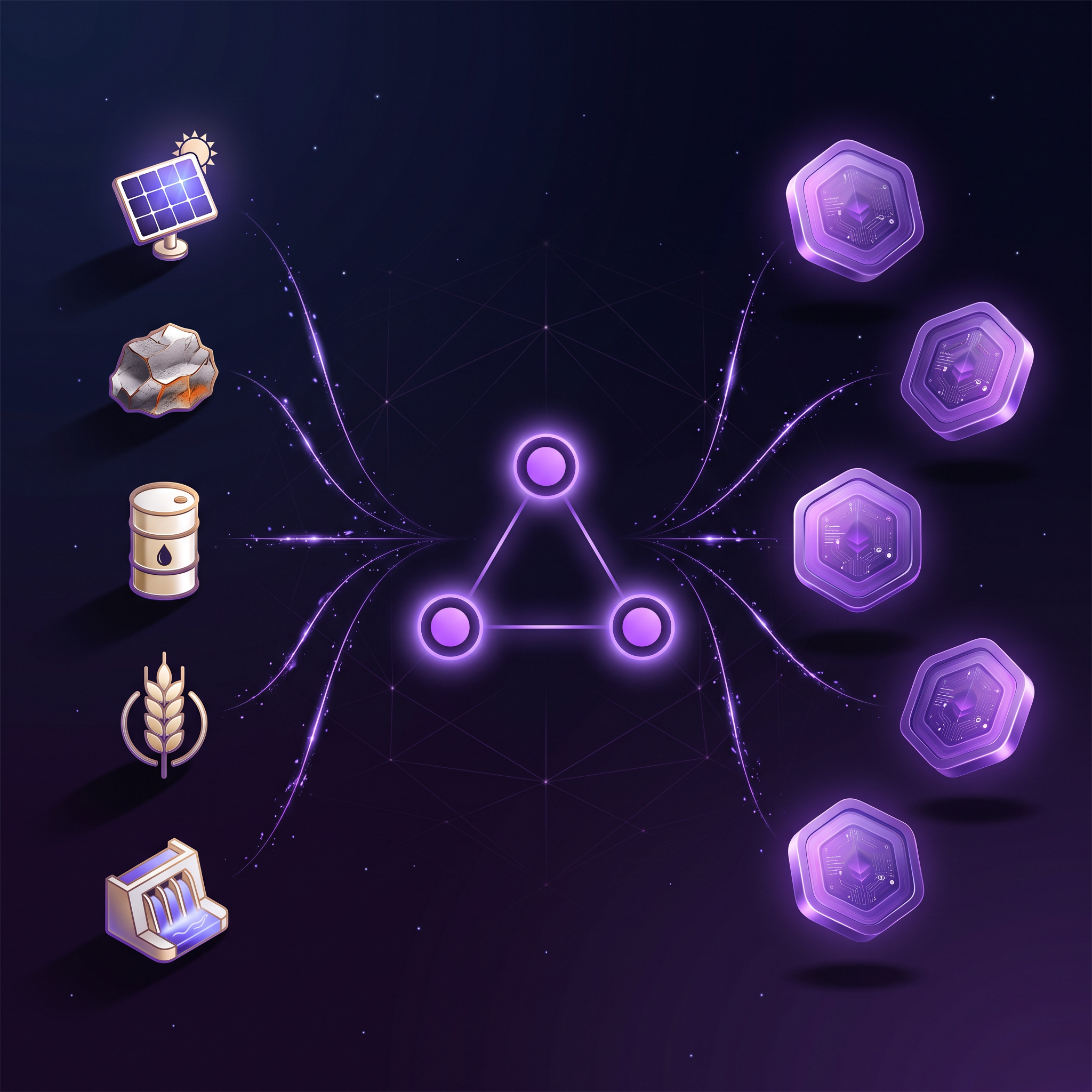
A node measures the world. Its silicon signs the value. That signature mints a tradeable asset within minutes — with every step independently verifiable by anyone, anywhere, without trusting Lindblad.
One layer.
Three markets.
The Spectral Ledger is Lindblad's native blockchain — the physical layer where all three market primitives coexist and interact. PYCO incentivizes the hardware operators that keep the network honest. RWAFi tokenizes real-world assets with cryptographic proof. DeFi provides the liquidity pools and AMM infrastructure that give those tokens a market.
Every operation across all three markets is secured by the same cryptographic layer — hardware-anchored signatures that prove who signed, what was signed, and when, without trusting any intermediary.
Physical Coherence Token
PYCO is the native token of the Spectral Ledger, minted only by nodes that demonstrate continuous physical coherence. It cannot be pre-mined or minted by software — it emerges from hardware running the protocol.
Deployed on Arbitrum One and Polygon mainnet, bridged into the Spectral Ledger for use across LindFi and RWAFi markets. The bridge is secured by the same cryptographic layer that anchors every attestation.